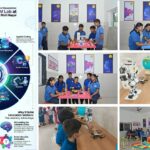

In a world where technological disruption is constant and unpredictable, the question confronting educators is no longer whether to change, but how fast transformation can happen. The rise of artificial intelligence, robotics, extended reality, and bio‑digital systems has redefined the skills required for tomorrow’s workforce. Yet many classrooms continue to operate on outdated pedagogical models.
Dr. George Panicker, Founder & CEO of International STEAM Research (ISR), argues that the future of learning lies in heutagogy a self‑determined, learner‑driven approach that empowers students to explore, question, and innovate. He explains. “Students must learn how to learn. That is the only way to stay employable in a world where industries evolve faster than curricula.”
Heutagogy shifts the focus from teaching to capability development. Instead of memorizing content, students learn to navigate ambiguity, solve open‑ended problems, and take ownership of their learning pathways. These are precisely the competencies industries now demand.
Employers increasingly seek individuals who can adapt quickly, collaborate across disciplines, and innovate using emerging technologies. Heutagogical learning environments mirror these expectations by encouraging autonomy, creativity, and resilience.
Dr. Panicker emphasizes that technology is not the goal, it is the enabler. When used purposefully, advanced tools amplify heutagogical learning. AI personalizes learning and nurtures computational thinking, technologies such as Robotics and IoT spark futuristic imagination and scientific curiosity, cultivating hands‑on problem‑solving and design thinking. “These technologies help students become creators, not just consumers,” Dr. Panicker notes. “They learn to design solutions, not just follow instructions.”
International STEAM Research has been at the forefront of integrating heutagogy with experiential STEAM learning. ISR’s models emphasizes on Cognitive agility, Technological fluency and Human‑centric skills such as empathy, ethics, and collaboration. This combination ensures students are not only employable but capable of leading innovation in emerging fields.
Heutagogy does not diminish the role of teachers, it elevates it. Educators become mentors, facilitators, and architects of learning experiences. “Teachers are the catalysts,” Dr. Panicker stresses. “Technology supports them, but it is their guidance that shapes future‑ready learners.”
The future will belong to those who can learn continuously, adapt fearlessly, and innovate responsibly. Heutagogy, powered by futuristic technologies, offers a clear pathway to prepare students for this reality. As Dr. Panicker concludes, “We cannot prepare students for tomorrow with yesterday’s tools. The time to transform education is now.”