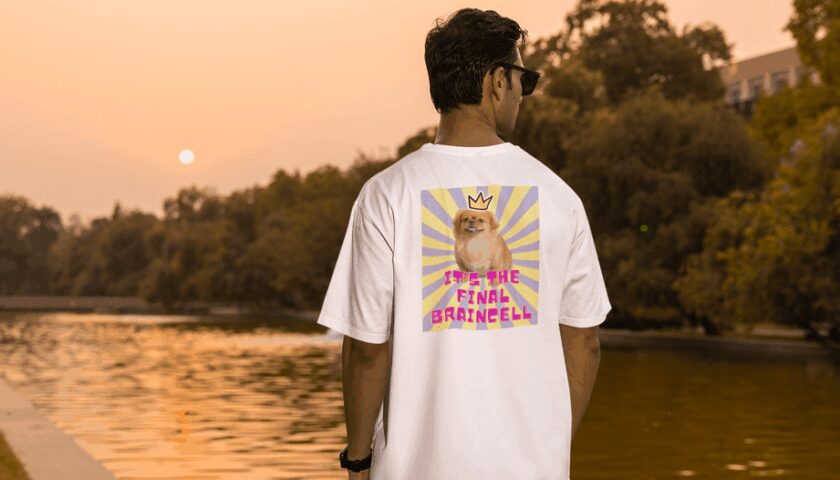
Across India’s digital ecosystem, memes – once considered fleeting internet humour, are finding a second life in fashion. Viral phrases, relatable jokes, and internet-native “brainrot” expressions are being translated into wearable products, signalling a shift in how culture, commerce, and community intersect.
This trend reflects a broader change in consumer behaviour, particularly among younger audiences. Instead of buying clothing solely for brand value or aesthetics, many consumers are choosing apparel that mirrors their online identity: humour, opinions, and shared cultural moments included.
From Feed to Fabric
India’s meme culture has matured rapidly over the last decade. Pages built around word-play humour, daily-life satire, coming-of-age struggles, startup culture, and pop-culture commentary now command audiences running into millions.
Words such as “Kaleshi”, “paglu”, “baddies”, or hyper-contextual jokes have become widely recognisable online. Increasingly, these phrases are being printed onto t-shirts, hoodies, and accessories – not as novelty items, but as everyday wear.
Unlike traditional fashion slogans, these designs often rely on immediacy and cultural relevance. Their appeal lies in recognition: the wearer and the viewer both understand the reference, creating a sense of belonging to a shared internet moment.
Why Memes Work as Merchandise
The commercial viability of meme-based apparel lies in its authenticity. Unlike celebrity endorsements or mass-market branding, meme-driven fashion is typically creator-led and community-approved.
When a meme transitions into merchandise, it carries the context of its origin – the page, the creator, or the community that popularised it. This gives the product an embedded audience before it ever goes on sale.
Creators and digital communities are increasingly leveraging this dynamic. Instead of relying solely on advertising or brand collaborations, many are experimenting with merchandise as a more durable monetisation channel. Platforms offering on-demand manufacturing and fulfilment have further reduced the risk, allowing creators to test ideas without investing in inventory.
With platforms such as Frankly Wearing as a part of this broader infrastructure, meme creators have the freedom to convert viral ideas into physical products through print-on-demand system.
A Shift in How Fashion Trends Emerge
Traditionally, fashion trends in India flowed from design houses, movies, or international runways to consumers. Meme-led apparel inverts that pipeline. Trends now originate from comment sections, reels, and group chats; moving from digital subcultures into mainstream visibility.
Sceptics often dismiss meme-based merchandise as short-lived. However, its growing adoption suggests otherwise. As long as internet culture continues to shape how people communicate and relate to one another, its translation into physical goods appears inevitable.
For Gen Z and Gen Alpha in India, clothing is increasingly a medium of expression rather than aspiration. Wearing a meme is less about fashion statements and more about signalling identity, humour, and community alignment.
In that sense, meme-driven apparel is not replacing traditional fashion, it is creating a parallel economy, where culture moves at internet speed and commerce follows close behind.