
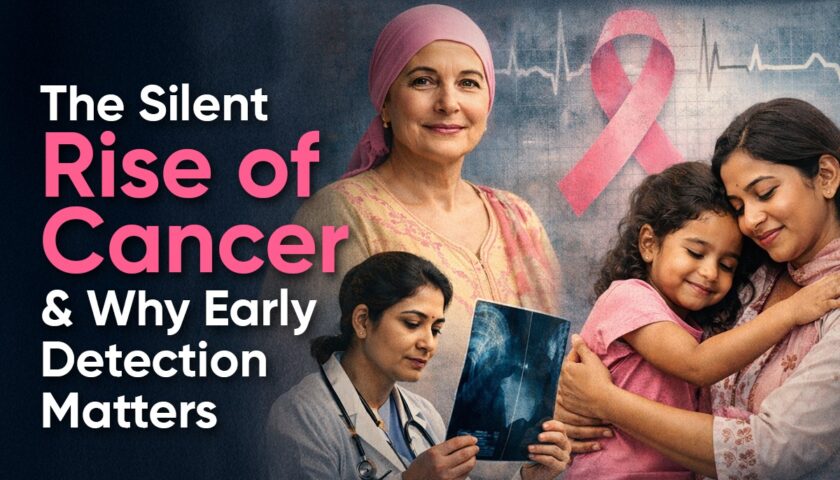
Cancer is no longer a distant or rare diagnosis. It has become one of the most pressing global health challenges of our time, impacting millions of families every year and cutting across age, geography, and economic background.
According to the World Health Organization and the International Agency for Research on Cancer (IARC), nearly 20 million new cancer cases were recorded globally in 2022, with 9.7 million deaths attributed to the disease. What is more concerning is that global cancer cases are projected to rise sharply in the coming decades, driven by ageing populations, lifestyle-related risk factors, and gaps in early detection.
India’s Growing Cancer Burden and the Cost of Late Diagnosis
India mirrors this global trend, but with challenges unique to its healthcare landscape. Recent data cited by GLOBOCAN, WHO, and national health reports estimate that over 1.5 million new cancer cases are diagnosed annually in India. Alarmingly, studies consistently show that more than 60 percent of these cases are detected at advanced stages, when treatment options become limited and survival outcomes decline significantly.
Late diagnosis remains one of the biggest contributors to cancer-related mortality in the country. Factors such as lack of symptom awareness, delayed screenings, social stigma, and limited access to timely medical consultation continue to play a role.
Why Early Detection and Prevention Matter More Than Ever
Medical research has repeatedly shown that early detection can change the course of cancer treatment and survival. When diagnosed early, many cancers can be treated more effectively, often with less aggressive interventions and better quality of life for patients.
For cancers such as breast and cervical cancer, early-stage detection is associated with significantly higher survival rates, often exceeding 80 to 90 percent, as highlighted by research referenced by the American Cancer Society and WHO-supported studies. In contrast, cancers diagnosed at later stages frequently see survival rates drop drastically.
Alongside early diagnosis, prevention plays a critical role. Lifestyle choices such as tobacco cessation, balanced nutrition, regular physical activity, vaccination, and routine health screenings have been shown to reduce cancer risk and improve long-term outcomes.
A Shift Towards Personalised and Patient-Centric Care
Cancer treatment itself has evolved considerably. The traditional one-size-fits-all approach is increasingly being replaced by personalised treatment strategies that consider the patient’s cancer type, stage, genetic profile, and overall health.
Research-backed, personalised oncology care has demonstrated improved treatment response and reduced side effects, allowing patients to maintain better physical and emotional well-being during therapy. This shift is being widely endorsed by global oncology bodies and is reshaping how cancer care is delivered across the world.
Awareness Remains the Missing Link
Despite advancements in diagnostics and treatment, awareness remains one of the weakest links in cancer care. Many cancer-related complications occur not because the disease is untreatable, but because it is detected too late.
Cancer awareness is not limited to statistics or annual campaigns. It involves educating individuals to recognise early warning signs, encouraging routine screenings, and fostering trust in evidence-based medical care. An informed population is better equipped to seek timely intervention and make confident healthcare decisions.
Reflecting the Future of Cancer Care in Mumbai
This evolving approach to cancer care is increasingly visible in urban healthcare ecosystems such as Mumbai. Modern oncology centres are focusing not only on advanced treatment technologies but also on early detection, prevention, patient education, and compassionate support.
One such example is Heal Park Clinics in South Mumbai, founded by senior oncologists and cancer researchers with international experience. The clinic emphasises early diagnosis, personalised treatment planning, and patient-centric care, reflecting a broader shift towards more thoughtful, research-driven oncology practices in India.
Address: Building No. 38, N S Patkar Marg, opp. Westside, Babulnath, Dadi Sheth Wadi, Gamdevi, Mumbai, Maharashtra 400007
Looking Ahead
As cancer cases continue to rise, the conversation must move beyond fear and statistics towards awareness, prevention, and early action. With timely detection, informed decision-making, and personalised care, cancer outcomes can improve significantly.
The future of cancer care lies not only in medical innovation but in building awareness-led healthcare systems that empower individuals to act early and with confidence.