
KUCHERA, RAJASTHAN | October 21, 2026
Yash Sharma and Team Embark on an Ambitious Defence Robotics and AI Initiative
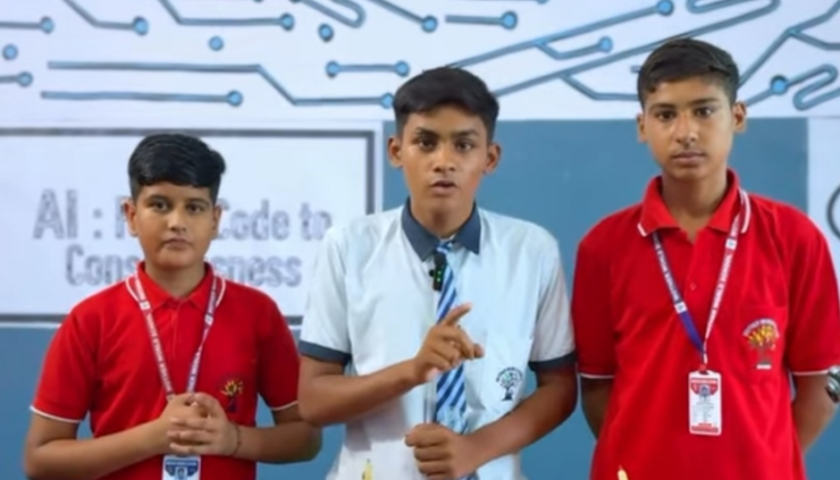
A promising new chapter in student-led technological innovation is taking shape at Mother World School, Kuchera, Rajasthan, with the commencement of Project VEER, a proposed initiative exploring defence-support robotics, artificial intelligence (AI), surveillance technology and border security monitoring. Led by student innovator Yash Sharma and his team, the initiative aims to combine research, teamwork and indigenous engineering to develop practical technology prototypes addressing selected security-related challenges.
Beginning its journey on October 20, 2026, Project VEER represents an ambitious undertaking for the student team, bringing together interests in robotics, coding, electronics, mechanical design and artificial intelligence. The project is envisioned as a platform for hands-on learning, technical experimentation and the development of innovative engineering solutions.
Four Key Technology Systems Under Exploration
Project VEER is expected to focus on four proposed technology systems:
1. Robotic Landmine Hazard Detection and Warning System
The team intends to explore a robotic platform designed to assist in identifying potential landmine hazards and issuing warnings. The concept focuses on remote hazard assessment and operator safety, with any detection capabilities requiring validation through controlled testing.
2. AI-Based Threat Detection and Alert System
This proposed system will explore the use of artificial intelligence to identify selected visual patterns or potential security concerns and generate alerts for human review. The objective is to study how AI-assisted monitoring can support situational awareness while retaining human oversight in decision-making.
3. Large Surveillance Robot Car
The initiative also proposes the development of a mobile robotic vehicle for remote observation and surveillance demonstrations. The team plans to investigate robotics, mobility, camera-based monitoring and remote operation as part of its prototype development process.
4. Smart Border Security Monitoring System
The fourth concept will explore the integration of sensors, monitoring technology and alert mechanisms to demonstrate how a smart system could support perimeter observation and security monitoring in a controlled environment.
All four systems remain proposed development objectives. Their capabilities, reliability and practical applications will need to be established through research, prototype construction and appropriate testing.
A Student-Led Journey into Practical Engineering
Project VEER is intended to provide students with an opportunity to move beyond theoretical learning and explore the practical challenges of engineering and technological development. The team plans to document its progress through detailed project reports covering research findings, system architecture, component selection, development stages, testing procedures and evaluation results.
Yash Sharma, the team leader, will coordinate the sharing of technical information about the proposed systems, their intended functions and the team’s development approach. The initial phase is expected to concentrate on research, planning, feasibility assessment, prototype design and safe experimentation.
The initiative will maintain a non-weaponised development approach, with emphasis on safety, responsible technology use and human verification of system-generated alerts.
Future Aspirations and Defence Innovation
Following the development and evaluation of suitable prototypes, the team hopes to explore opportunities to present its work to the Indian Army through appropriate and authorised defence innovation channels.
Any potential presentation, technical assessment, collaboration or further consideration would depend on the project’s maturity, applicable eligibility requirements and the approval of the relevant authorities. Project VEER has not been represented as an officially approved or adopted defence programme.
Yash Sharma on the Vision Behind Project VEER
Speaking about the initiative, Yash Sharma said:
“Project VEER is a major step in our school journey. Our team wants to turn innovative ideas into working prototypes and learn through practical engineering. Once the development and testing are completed, we aim to present our work to the appropriate defence innovation authorities and explore opportunities to contribute to India’s technological progress.”
Building the Foundation for Future Innovation
Work on Project VEER is expected to progress through research, planning, prototype development and controlled testing. The team intends to share updates as the initiative advances, providing information about its learning process, technical milestones and development outcomes.
By bringing together student curiosity, collaborative problem-solving and an interest in indigenous technology, Project VEER seeks to encourage a culture of innovation and practical engineering among young learners.
Project VEER is a student-led initiative with an ambitious vision: to explore how responsible robotics and artificial intelligence can contribute to safer, smarter and more technologically advanced solutions for India.
About Project VEER
Project VEER is a proposed student-led defence-support robotics and artificial intelligence initiative being developed by Yash Sharma and his team at Mother World School, Kuchera, Rajasthan. The initiative aims to explore robotics, AI-assisted monitoring, surveillance platforms and security-alert technologies through research, prototype development and controlled testing.
Media Note: Project VEER is at the proposed initiative stage as of October 20, 2026. The systems described are development objectives, not verified operational technologies. No official endorsement, approval, adoption or association with the Indian Army is being claimed.