
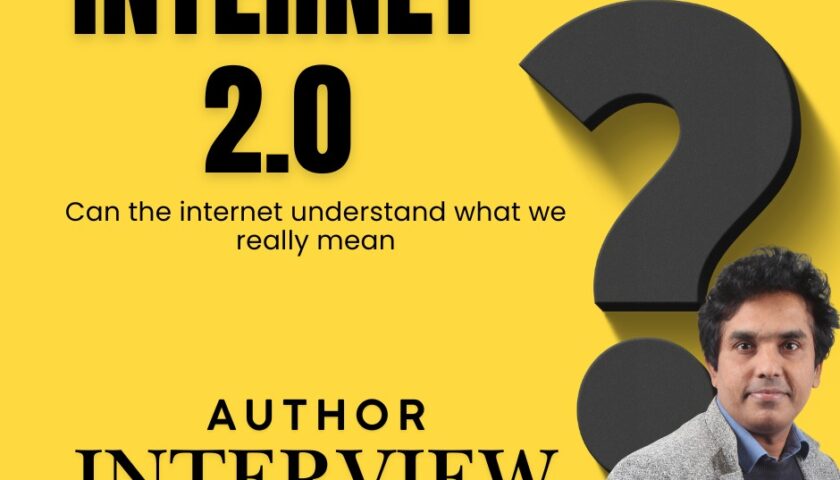
Gokul Kartha a software architect and technologist working on large-scale systems and long-term internet architecture. He is the author of a recent Internet Engineering Task Force (IETF) draft titled “Internet 2.0: An Intent-Aware, AI-Native Extension of the Web,” which explores how the web may need to evolve as artificial intelligence becomes central to how people seek information. In this interview, he explains the ideas behind the draft and the larger questions it raises about the future of the internet.
Q: You recently published an IETF draft titled “Internet 2.0: An Intent-Aware, AI-Native Extension of the Web.” What motivated this work?
The idea came from a very normal situation. I was trying to understand a medical topic and opened a well-known and trusted website. The information was correct and detailed, but understanding it took a lot of effort. I had to read long sections, go back and forth, and connect things myself. That moment made me realize something important. The internet is very good at giving information, but it does not understand what the user is actually trying to understand. This is not only about health. The same thing happens when people search for jobs, try to understand rules, read financial documents, or learn something new. The web gives content, but understanding is left to the user.
Q: Isn’t this something search engines or AI chatbots already solve?
They help, but only in parts. AI has changed how people ask questions. We now talk naturally and explain what we want in simple language. But this intelligence mostly exists inside separate apps and closed platforms. It is not part of the web itself. The internet cannot discover AI models like it discovers websites. It also cannot decide which AI model is best for a specific question. This creates a gap between how humans communicate and how the web is built.
Q: What is the core limitation of today’s web architecture?
The limitation is very basic. The web is designed to request documents. Every action is a request for a page or a file at a specific address. This works well when you want to read content. But when someone says, “Explain this,” or “Help me choose,” they are not asking for a page. They are asking for help and understanding. Today’s web has no natural way to handle that kind of request.
Q: How does the Internet 2.0 proposal try to address this problem?
The draft looks at how the web could change to understand user intent better. One idea is to allow users to say what they want to achieve, instead of asking for a specific page. Another idea is something called a Model Resolution Network. It is similar to DNS, which helped the early internet by translating names into machine addresses. In the same way, this system would help find the right AI model based on what the user wants, what the model is good at, and how trustworthy it is.
Q: What role does the browser play in this vision?
Today, browsers mainly show pages. They do not help much with understanding. In an intent-aware web, the browser would play a bigger role. It would work with AI systems to give clear explanations, comparisons, or guidance. At the same time, it would show where the information comes from and respect privacy. The browser becomes more like a helper, not just a screen.
Q: Is this proposal meant to replace the existing web?
No, not at all. The current web works well and should continue to exist. It is open and decentralized, and that is important. The idea is to extend the web so it remains useful in an AI-driven world. The draft is open-ended on purpose. It is meant to start discussion and thinking, not to define a final solution.
Q: What larger question does this raise about the future of the internet?
For many years, humans have adjusted themselves to the web. We learned how to search, how to skim results, and how to build understanding on our own. As AI changes how we communicate and think, the next step may be for the internet to adjust to us instead. The future web will not be judged by how many pages it has, but by how well it understands what people actually mean when they ask for help.
Q: Your work includes system-level initiatives like OpenRoadSim, books on technology and society, and now this IETF draft. How do these connect for you?
For me, they are all connected by the same interest. I am interested in how complex systems affect people, and how those systems can be designed in a more human-friendly way. OpenRoadSim came from seeing how complex and unclear software-defined vehicle development had become. It was an attempt to bring clarity to a difficult technical area. The books approach similar questions, but from a more human and social point of view. This IETF draft looks at the same problem at a different level. It asks whether the internet itself still matches how humans think and communicate. I see all of this as part of one larger question: how do we design systems that serve people better as technology continues to evolve?
About the Interviewee
Gokul Kartha is a software architect and technologist working on large-scale systems and long-term internet architecture. His interests include AI-native platforms, internet-scale system design, and open-source initiatives in Software-Defined Vehicle (SDV) development. He is the author of an Internet Engineering Task Force (IETF) draft exploring intent-aware web architecture.
LinkedIn: https://www.linkedin.com/in/gokulkartha/

![PhotoStick Omni Reviews [CONSUMER REPORTS] : Shocking Secrets About The Photo Stick Omni!](https://buzzinginfo.com/wp-content/uploads/2024/04/171213642532585156217.1712134944690_content_img-150x150.jpeg "PhotoStick Omni Reviews [CONSUMER REPORTS] : Shocking Secrets About The Photo Stick Omni!")