Eastape Films’ VFX Producers Navi Joshi and Veerinder Singh worked across planning, production and post to bring the video’s expansive digital world to screen
An endless staircase can be a straightforward visual idea. Making it feel like a real place, while using it to carry an entire narrative, is considerably more complicated.
That was the VFX challenge behind Karan Aujla’s P POP Culture, where Eastape Films handled the visual-effects production under VFX Producers Navi Joshi and Veerinder Singh.
Directed by Agam Mann and Aseem Mann, the video uses the staircase as a representation of a person’s journey. Karan Aujla begins the climb as a child and encounters different people, relationships and obstacles as the story progresses. Some continue alongside him, while others fall away.
The environment changes with the journey, eventually becoming a largely digital world that extends far beyond the limitations of the physical set.
Starting With the Final Image
The VFX work began during pre-production rather than after the footage had been shot. Approximately a month was spent working through the visual plan. Key sequences were developed in CGI beforehand, giving the production a clearer understanding of how the live-action material would eventually sit within the digital environment.
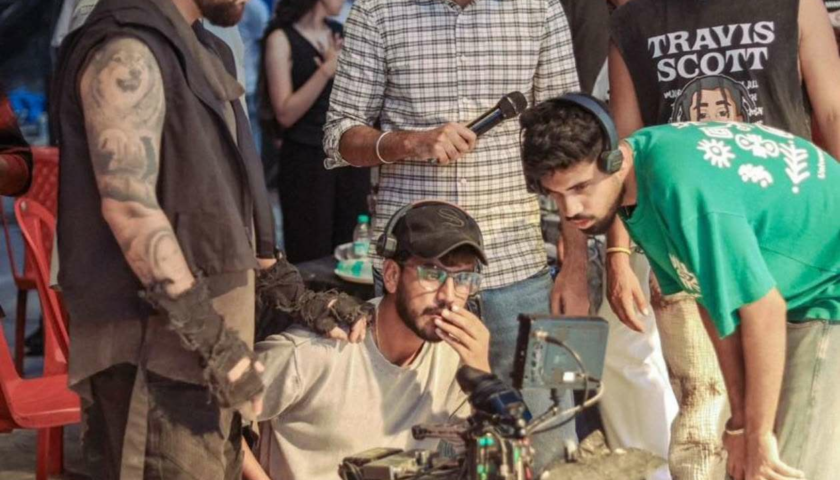
The team also produced rehearsal footage with dummy performers. These tests helped establish movement, framing and other requirements before the principal photography.
For a sequence dependent on a large CGI environment, that preparation was important. A decision made during filming could have consequences much later in the compositing process.
Creating Movement Without Gravity
The production combined physical photography with digital techniques. Some portions were captured using a levitating harness, allowing the performers to be suspended and moved through the frame. The resulting footage could then be integrated into the CGI environment during post-production.
The technique gave the VFX team an actual performance to work with while allowing the surrounding world to be altered digitally.
It also illustrates the relationship between production and VFX on the project: the digital work was influencing how certain shots were captured in the first place.
Constructing the Staircase
Once the photography was completed, the digital environment became the focus of the post-production process.
The staircase and its surrounding elements were created in CGI and combined with the live-action footage. In total, the project included more than 120 VFX shots.
More than 25 artists contributed to the work across areas such as roto, prep, 3D and CG, FX, texturing, lighting and compositing.
The challenge was not simply to build a large staircase, but to make it behave like a consistent environment. Camera perspective, lighting, scale and performer interaction had to remain convincing as the protagonist moved through the different sections of the story.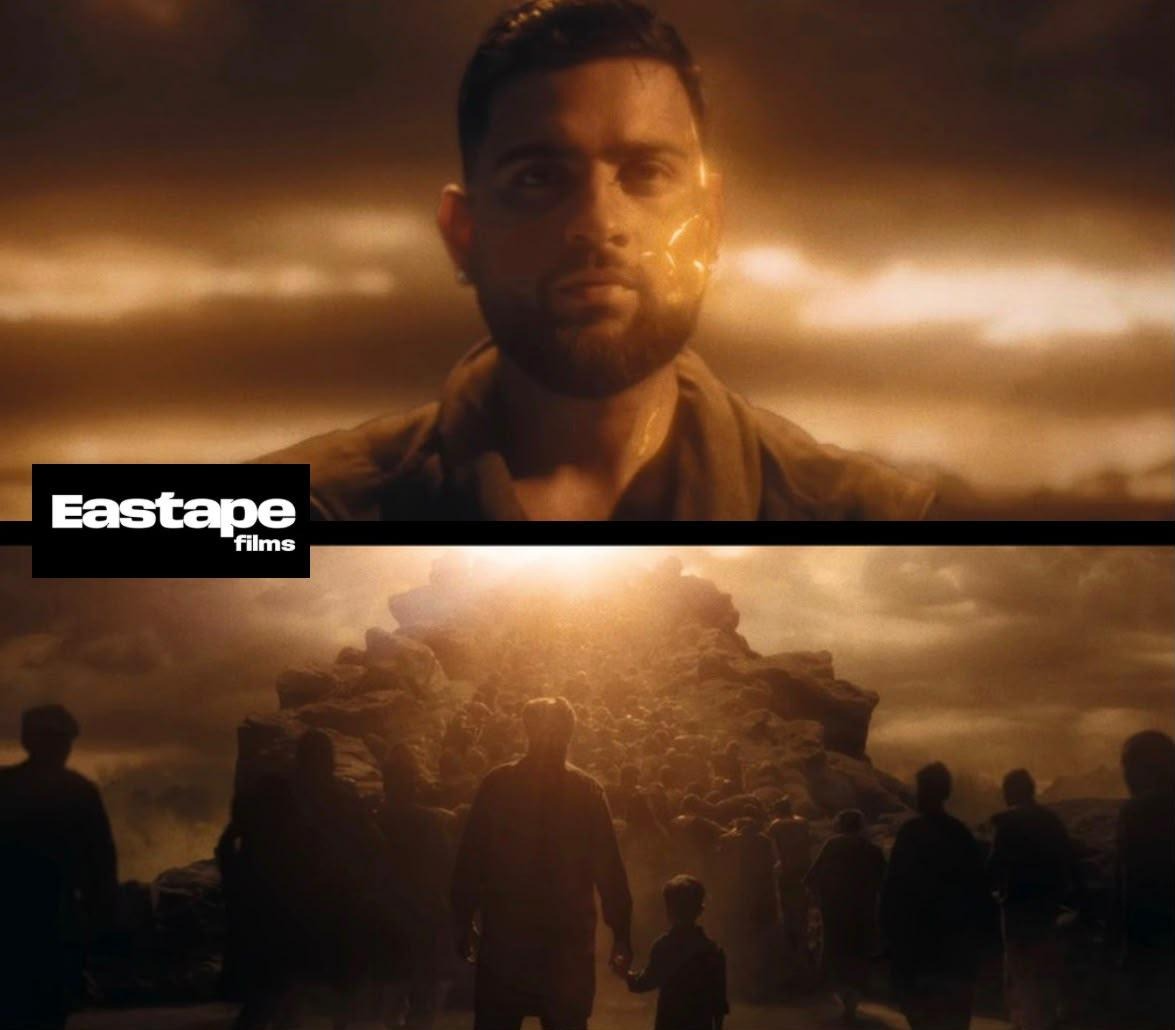
A Digital Environment With a Narrative Function
The staircase gradually takes on meaning as the video progresses.
The early sections establish the protagonist’s childhood and the encouragement he receives from his father. Later, the people encountered on the climb represent friendships, relationships and the changing circumstances surrounding his journey.
Some remain on the path. Others stop.
The visual language allows the video to compress years of experience into a single physical idea: continuing to climb despite what happens along the way.
The climax shifts that idea again. Reaching the apparent end does not bring the journey to a close. Instead, another path opens up.
Navi Joshi and Veerinder Singh’s Role
For VFX Producers Navi Joshi and Veerinder Singh, the production involved maintaining a connection between the creative concept and the practical realities of VFX production.
Their work with Eastape Films extended across the project’s visual planning, on-set requirements and post-production pipeline. The CGI environment had to be considered alongside the live-action photography, particularly for sequences involving the levitating harness.
That meant the VFX process was effectively present throughout the production rather than confined to the final stage.
The Line Between Set and CGI
The finished video deliberately makes it difficult to separate what was physically captured from what was created digitally.
The performers provide the physical reality of the story, while the CGI staircase gives that story its scale. Together, they create an environment that can expand beyond the constraints of a conventional set.
In P POP Culture, the visual effects ultimately serve a fairly human idea. The staircase may appear endless, but that is precisely the point: the destination is less important than the act of continuing the climb.
Eastape Filmshttps://eastapefilms.com