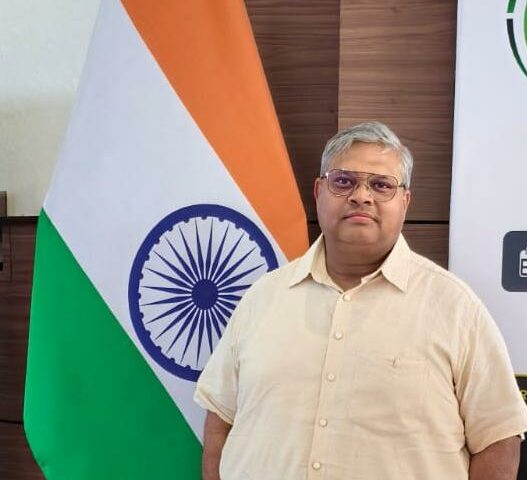
New Delhi, India: Amid the growing burden of chronic health conditions, Dr. Vikas Singhal highlights the importance of detailed case-taking, longitudinal health records and responsible collaboration in advancing patient-centred healthcare.
As healthcare systems increasingly focus on chronic disease management and long-term wellbeing, Dr. Vikas Singhal, a classical homeopathic physician with more than 23 years of professional experience, is advocating for a more individualised and patient-centred approach to understanding health.
According to the World Health Organization (WHO), noncommunicable diseases (NCDs) caused at least 43 million deaths globally in 2021, equivalent to 75% of non-pandemic-related deaths. Cardiovascular diseases, cancers, chronic respiratory diseases and diabetes account for a significant proportion of this burden. WHO also identifies factors such as physical inactivity, unhealthy diets, tobacco use, harmful alcohol consumption and air pollution as contributors to NCD risk.
Against this backdrop, Dr. Vikas believes that healthcare conversations need to look beyond a diagnostic label and consider the wider clinical context of an individual. “Two patients may have the same diagnosis but completely different medical histories, symptoms, lifestyle patterns and responses to treatment. Understanding the individual is therefore an important part of responsible healthcare,” says Dr. Vikas Singhal.
Practising since 2004, Dr. Vikas has built his clinical approach around detailed case-taking and understanding the individual pattern of symptoms rather than viewing a diagnosis in isolation. His approach considers relevant medical history, lifestyle factors, symptoms, investigations and changes observed during follow-up.
A key aspect of Dr. Vikas practice is the emphasis on maintaining detailed patient histories and follow-up records over time. According to the practice, records have been maintained across nearly 24–25 years, documenting symptoms, clinical history, investigations and observations made during follow-up. For patients dealing with recurring or complex health concerns, such longitudinal documentation can provide a structured timeline of their health journey. Previous reports, laboratory investigations, imaging and symptom changes can be reviewed alongside subsequent observations, helping patients and healthcare professionals have more informed conversations about what has changed and what may require further evaluation.
This emphasis on detailed documentation is also reflected in Dr. Vikas Singhal’s ongoing clinical and academic work. He is set to present his documented case study, “A Case of Chronic Osteomyelitis Treated with Homeopathy,” at the 79th LMHI World Congress 2026 in Mérida, Mexico, scheduled for October 21–24. The case focuses on a patient with chronic osteomyelitis and forms part of Dr. Singhal’s continuing work in documenting complex and chronic health conditions. His selection for an oral presentation at the international congress provides an opportunity to present the case to an international professional audience and contribute to discussions around clinical documentation and research in homeopathy. He has also previously presented on bone infections and the role of homeopathy at the AAAS National Homeopathy Conference in Indore.
Dr. Vikas also stresses that documentation should not be confused with proof of treatment effectiveness. Individual patient records and case observations can support professional learning and generate questions for further research, but they do not replace appropriately designed clinical studies.
This philosophy forms part of the thinking behind Dr. Vikas forthcoming book, Future of Integrative Healthcare: From Competition to Collaboration. The book explores how different areas of healthcare, including conventional medicine, preventive care, nutrition, mental health, lifestyle management and evidence-based complementary approaches, can potentially contribute to a more coordinated patient-centred model where appropriate.
The idea of collaboration is particularly relevant as the global conversation around traditional, complementary and integrative medicine evolves. WHO’s Global Traditional Medicine Strategy 2025–2034 places emphasis on strengthening the evidence base, ensuring safety and appropriate regulation, integrating safe and effective approaches into health systems where appropriate, and encouraging cross-sector collaboration.
For Dr. Vikas, however, integration does not mean combining different systems automatically. Instead, he emphasises professional judgement, appropriate investigations, clear communication, referral when necessary and consideration of the evidence and safety associated with any intervention.
The discussion is particularly important in complementary healthcare, where evidence varies across different approaches and conditions. The U.S. National Center for Complementary and Integrative Health (NCCIH), for example, states that there is little evidence supporting homeopathy as an effective treatment for any specific health condition and advises that proven conventional care should not be replaced with homeopathy. It also notes that some products labelled as homeopathic may contain active ingredients that can cause side effects or interactions.
Dr. Vikas’ approach therefore places emphasis on responsible healthcare decisions rather than positioning one medical system as universally suitable. Depending on an individual’s circumstances, healthcare may involve medical evaluation, diagnostic investigations, prescribed medicines, nutrition, physical activity, lifestyle changes, yoga or other supportive practices where appropriate.
“Patient-centred care should not be about choosing one system over another. The central question should be what is appropriate, safe and evidence-informed for the individual patient, and when another healthcare professional or specialist is required, that referral should be part of responsible care,” Dr. Vikas says.
His academic background, which includes a B.Sc. in Biology, a Diploma in Nutrition and Health Education, a BHMS and an M.Sc. in Microbiology, further reflects his interest in viewing health through multiple disciplines.
As chronic diseases continue to require long-term management, Dr. Vikas believes that healthcare must move towards better documentation, meaningful patient participation, appropriate investigations, evidence-informed decision-making and greater professional collaboration. His forthcoming book seeks to contribute to this conversation by examining how healthcare can move from competition between systems towards responsible collaboration, while keeping the individual patient, safety and evidence at the centre.
About Dr. Vikas Singhal
Dr. Vikas Singhal is a classical homeopathic physician with over 23 years of professional experience and has been practising since 2004. His approach focuses on detailed case-taking, individual health histories and long-term patient follow-up. With an academic background spanning Biology, Nutrition and Health Education, Homeopathy and Microbiology, he is also exploring the evolving role of personalised and integrative healthcare through his forthcoming book, Future of Integrative Healthcare: From Competition to Collaboration.