
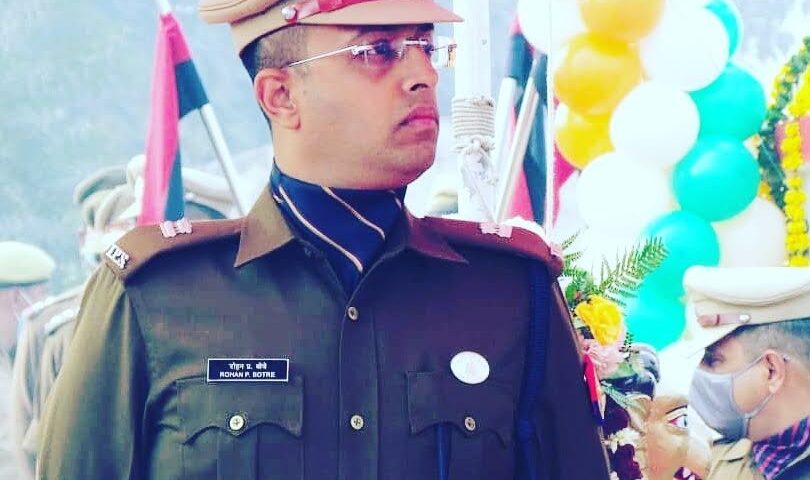
The career of an Indian Police Service officer is rarely defined by a single posting. It is shaped by the institutions they work within, the responsibilities they assume and the administrative environments they encounter over the course of their service. For IPS officer Botre Rohan Pramod, the journey from his induction into the service in 2016 to his present central deputation represents several stages of professional responsibility within the Indian police administration.
An officer of the 2016 batch belonging to the Uttar Pradesh cadre, Rohan Pramod Botre entered the Indian Police Service after securing All India Rank 187 in the UPSC Civil Services Examination. Nearly a decade into his career, his service record reflects progression through different levels of police administration, from his initial assignments as an Assistant Superintendent of Police to responsibilities as Superintendent of Police and, subsequently, central deputation.
A Career That Began in the Uttar Pradesh Cadre
Botre Rohan Pramod joined the Indian Police Service on August 29, 2016, as a direct recruit through the Civil Services Examination. His entry into the Uttar Pradesh cadre placed him within one of India’s largest state police administrations, an institutional environment that encompasses diverse administrative, geographical and policing requirements.
His initial years were spent in probationary and training assignments as an Assistant Superintendent of Police. These early responsibilities formed the foundation of his professional exposure to policing and administration.
By 2018, he had progressed to an Assistant Superintendent of Police assignment, followed by responsibilities as Additional Superintendent of Police (City) in 2019. He continued in the latter role in 2020 before moving into the position of Superintendent of Police in 2021.
This progression is significant in understanding the structure of an IPS career. The responsibilities associated with each designation differ in scope, administrative authority and operational requirements. Moving through these positions involves a gradual transition from learning the functioning of the police establishment to taking on broader supervisory and administrative responsibilities.
Understanding the Different Dimensions of Police Administration
Police administration involves considerably more than the public-facing aspects of law enforcement. It requires an understanding of institutional procedures, administrative coordination, operational planning and the relationship between the police and the communities they serve.
The position of Assistant Superintendent of Police provides an officer with early exposure to field-level policing and the functioning of district police establishments. As responsibilities expand, the administrative dimensions of the role become increasingly important.
Assignments such as Additional Superintendent of Police (City) and Superintendent of Police bring different requirements in terms of supervision, coordination and the management of policing responsibilities.
Rohan Pramod Botre’s progression through these positions within the Uttar Pradesh cadre forms an important part of his professional record. Rather than viewing his career through individual designations, it offers a broader picture of the institutional experience accumulated over successive assignments.
His service record also documents a transition to central deputation in May 2023, marking another phase in his professional journey.
The Move to Central Deputation
Central deputation is an important feature of the All India Services framework, allowing officers to serve in institutions and departments under the Union Government.
For an IPS officer, such a transition involves moving from the administrative environment of a state cadre to a different institutional setting. The nature of responsibilities can vary depending on the department, organisation and specific assignment.
According to the Ministry of Home Affairs’ IPS Civil List, Rohan Botre has been on central deputation since May 2023. His service profile records his progression to Pay Level 12 in 2025.
The move represents a change in the institutional context of his service after several years within the Uttar Pradesh police administration.
It also reflects the wider structure of the Indian Police Service, where officers may acquire professional experience through both state-level and central assignments over the course of their careers.
Recognition and Professional Milestones
Rohan Botre’s service record includes two recognitions from the Uttar Pradesh Police establishment: the Director General of Police’s Commendation Disc in Silver in 2020 and the Gold commendation in 2022.
These recognitions form part of his documented professional milestones during his service in the state cadre.
In a career where responsibilities evolve with each assignment, such milestones provide additional context to an officer’s professional journey. They sit alongside the more formal markers of service, including batch, cadre, postings and promotions.
Beyond Designations: The Larger Picture of an IPS Career
The Indian Police Service offers a career structure in which professional experience develops across different administrative settings. An officer’s responsibilities may change considerably depending on the nature of an assignment, the institution involved and the level of authority associated with the position.
Rohan Botre’s career offers a documented example of this progression. From joining the 2016 IPS batch through the UPSC Civil Services Examination to serving in different capacities within the Uttar Pradesh cadre and moving to central deputation, his professional record spans multiple stages of the service.
For those interested in understanding the careers of India’s civil servants, such journeys offer a perspective beyond examination results and official designations. They provide a glimpse into the institutional structure of public administration and the different professional environments in which officers serve.
As his career continues, the trajectory of IPS Rohan Botre remains part of a larger story about the varied responsibilities, opportunities and professional transitions that define a career in the Indian Police Service.
Tags
ROHAN BOTRE IPS
ROHAN BOTRE
ROHAN PRAMOD BOTRE IPS
IPS ROHAN BOTRE
IPS ROHAN PRAMOD BOTRE
Indian Police Service
UPSC Civil Services Examination