
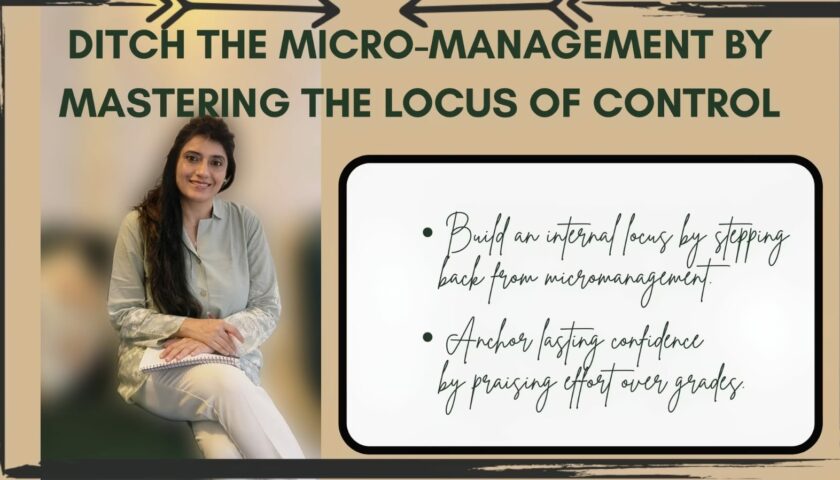
In my last article, I mentioned a hard truth every parent eventually confronts: Sometimes our ‘easy’ child is not always happy, they are just surviving, wearing compliance like a shield because they are terrified of losing our approval. Every parent aspires to raise a confident, independent child capable of navigating life’s inevitable ups and downs. Yet, amidst the rush of busy schedules and daily stress, it’s remarkably easy to slip into micro-managing every detail of our child’s lives.
To understand why some children grow up feeling helpless while others thrive with genuine inner strength, we can look to a profound psychological framework: the Locus of Control.
What is Locus of Control?
In psychological terms, the locus of control defines where an individual believes their power originates:
- An External Locus (Feeling Helpless): This occurs when a child believes that outcomes are dictated entirely by external forces such as strict rules, luck, or parental demands. These children typically conform only under pressure or out of fear of punishment in their own lives.
- An Internal Locus (Feeling Empowered): This develops when a child learns that their own choices, efforts, and agency directly shape their outcomes. They recognize that mistakes serve as valuable feedback to resolve challenges independently.
Operating a household through rigid control and constant supervision fosters an external locus. Children stop trusting their internal compass and learn to wait for external direction. Conversely, cultivating a secure and supportive environment fosters an internal locus, building durable, lifelong self-reliance.
CORE STRATEGIES FOR PARENTS
1.Shift from Control to Connection
Micromanaging schedules and milestones often comes from our own anxiety rather than what your child actually needs. Instead, try giving them room to make minor mistakes and face natural consequences so they can build true resilience and learn how to solve problems on their own.
2.Prioritize Emotional Attunement
Children cannot learn how to calm down if their distress is brushed aside or met with demands for instant obedience. When your child feels overwhelmed, pause before trying to fix it and acknowledge their feelings first like saying, “I can see you are really frustrated right now” because guidance works best once they feel truly heard.
3.Nurture Internal Motivation over Compliance
When a child’s sense of safety depends entirely on “getting it right “, they develop a fragile self-worth that relies solely on applause from others. Instead, spark their curiosity by asking open-ended questions like, “How do you feel about how that turned out?” to help them value their own efforts over external approval.
4.Break Unhealthy Generational Cycles
We are heavily influenced by how we were raised, often defaulting without realizing it to strictness or emotional distance. By taking a moment to reflect on your own triggers, you can respond with awareness instead of inherited stress, creating a much healthier relationship with your child.
THE STUBBORN LOOP: WHAT HAPPENS WHEN GENTLE CORRECTION FAILS?
Let’s be honest for a moment. You take a deep breath, you manage your anxiety, you validate their feelings, and you try to guide them calmly and the child still refuses to listen, or makes the exact same mistake for the fifth time today.
When a child gets stuck in this stubborn cycle, it is easy to think that this gentle parenting stuff doesn’t work, I need to get strict! But before you lose your temper, look at what is really happening:
- The Overload Trap: When a child repeats a mistake over and over, it usually isn’t to make you mad. It is a sign that their brain is overwhelmed. They are having an emotional traffic jam and literally cannot process your correction right then.
- The Control Struggle: If a child feels pushed around or pressured all day, stubbornness becomes their only way to protect themselves. By digging their heels in, they are desperately trying to get back a little bit of control over their world.
HOW TO BREAK THE LOOP:
1.Stop Repeating Yourself: If explaining something five times didn’t work, saying it a sixth time in a louder voice won’t help either. Break the cycle by changing things up. Step away for two minutes or hit the pause button for example ‘I think we both are stuck, let’s close the books, get some water and start fresh again in a few minutes’.
2.Let Natural Consequences Teach Them: If they keep making the same mistakes even after you warned them, stop rushing in to save them. Let reality do the teaching. Experiencing the minor, safe result of their own mistakes teaches the brain much faster than a long lecture ever will.
3.Offer Small Choices: Ask yourself honestly: ‘Are they fighting the task itself, or are they just fighting against feeling controlled and pushed around all the time?’ Sometimes, giving them a tiny bit of control breaks the stubborn spell instantly. For example, try asking ‘Do you want to finish work with a blue pencil or a red one?’
PUTTING IT INTO PRACTICE: A REAL WORLD EXAMPLE
Let’s be honest a few household battlegrounds test our patience quite like Homework Time. It is the ultimate testing ground where our desire for control clashes with our child’s growing independence. Here is how you can flip the script from a nightly power struggle into a master class in confidence.
1.Step Back From Micromanaging
Instead of hovering over their desk like an anxious helicopter, releasing every shaky stroke and intercepting every mistake, which accidentally sends the message that they are completely helpless without you, try setting the stage and handing over the control. Let them know the boundaries for example ‘Homework time will be 4 pm to 5 pm you choose which subject to tackle first’. When small mistakes happen, fight the urge to jump in and save them so they can learn from trying things on their own.
2.Validate Feelings Before Correcting
Instead of losing your temper or demanding instant focus the second they complain about a hard assignment, which only makes them more stressed, pause and address their feelings first. Once they calm down, guide them gently.
3.Praise Effort, Not Just the Grade
Instead of shouting and rewarding for an A+ which makes their self-worth depend only on shiny grades and leaves them afraid of failing, try helping them feel proud of their own hard work. Ask them, “How do you feel about the effort you put into this?” This will teach them to measure success by their own personal growth instead of a score on a paper.
4.Check Your Own Anxiety
Instead of stressing out over a messy assignment because you worry, it means you are a bad parent or that your child will fall behind, take a deep breath and change your mindset. Remind yourself that a messy, imperfect project is just a way for them to learn, not a test of your parenting. Giving them space is not lazy parenting, it is the best way to help them grow independent.
Shifting how we handle daily friction points like homework is more than just a way to survive the afternoon rush, it is an investment in your child’s core character. When we step back from micromanaging, validate their emotions, and celebrate their hard work rather than just their grades, we teach them a powerful truth: they are capable, resilient, and entirely equipped to navigate life on their own feet. True confidence isn’t something we hand to them, it’s something they build from the inside out.
AUTHOR: KARISHMA